Bunions
Expert diagnosis and treatment for bunions at Suburban Foot & Ankle
What Exactly Is a Bunion?
A bunion is, basically, a bony bump that is developed on the base of your big toe. When the bones that are in the front part of your foot shift out of their natural position, the big toe will start to point towards the direction of the rest of your toes. This misalignment is due to the fact that the MTP joint, being the big toe joint on the foot, is malfunctioning which in turn causes the bump that is visible and could be painful.
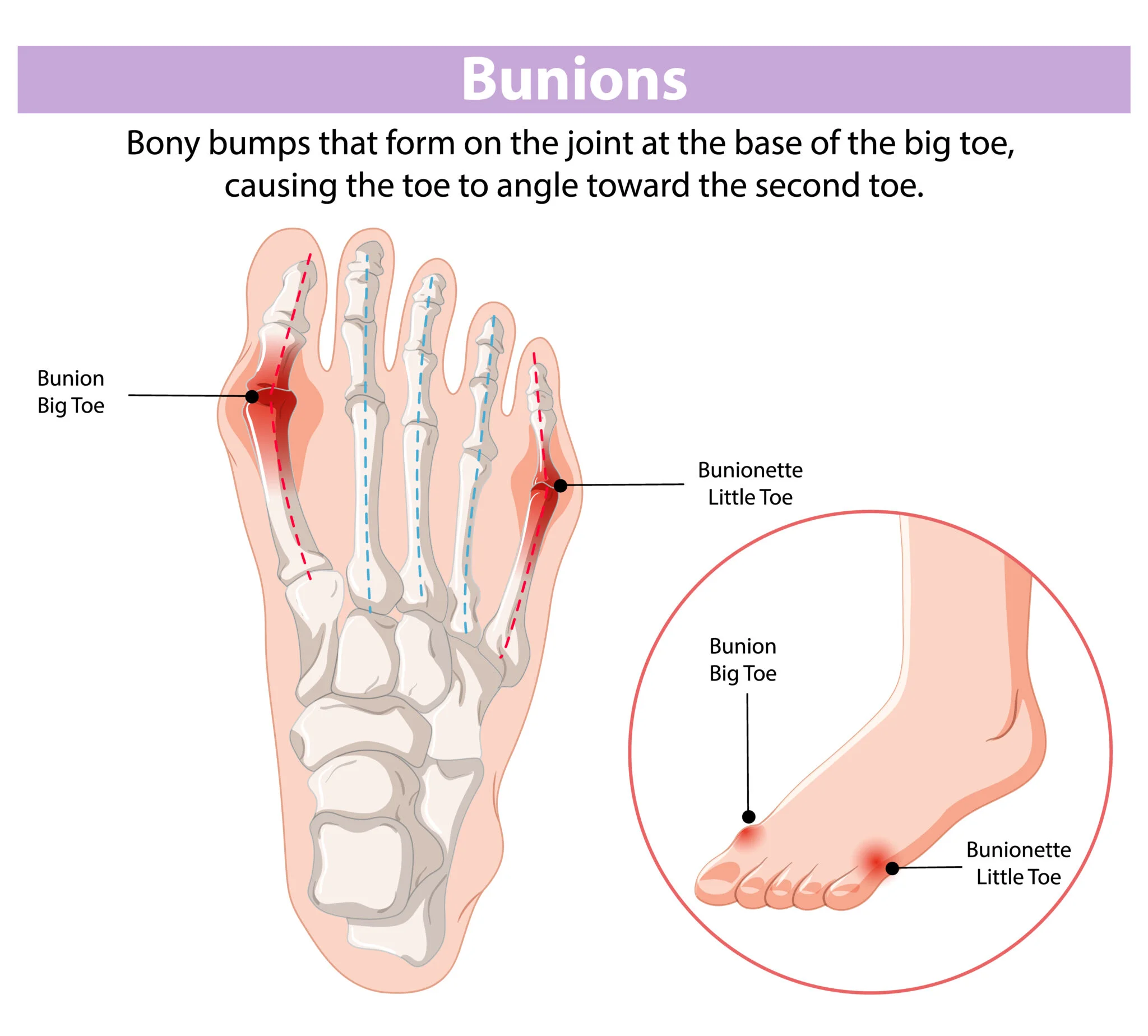
The bunion will progressively worsen over time if left untreated, leading to increased pain. If you experience any of the following symptoms, it is advisable to consult a doctor for a personalized evaluation and treatment plan.
- A noticeable bump on the side of your big toe.
- Pain or discomfort, especially when wearing shoes.
- Trouble bending or moving your big toe.
- Redness, swelling, or irritation around the joint.
Types of Bunions
Traditional Bunion: It is the usual form and is generally observed at the beginning of the big toe. As time goes by, the big toe leans toward the small ones, thus the joint sticks out, and a bump forms.
Bunionette (Tailor's Bunion): A bunionette is a small bump that gets bigger at the internal side's bottom of the pinky toe. This is because of the same reasons as a typical bunion, including wearing shoes that are too tight or some foot injuries.
Why Do Bunions Develop?
Generally, bunions arise when there is excessive pressure on the joint at the base of the big toe, which causes the bone to gradually slip out of place. There can be a few reasons for this, and it is usually a matter of several factors:
- Bunions can be hereditary. If your parents have them, you are likely to too.
- The toes are pushed out of position due to the tight, narrow shoes or high heels.
- Arthritis and other inflammatory infections of the joint may cause a worsening of the bunion through joint swelling.
- Past foot injuries may cause a problem with the way you walk, thus, putting more pressure on the affected toe joints.
- Flat feet or pes planus as well as high arches or pes cavus can lead to bunions as they put higher pressure on the big toe joint.
Signs and Symptoms of a Bunion
A bunion might be part of your life if the following signs and symptoms come your way. Please, consider them!
- Pain and Discomfort: Some painful sensations might emerge around the big toe joint, especially when you walk or wear tight shoes.
- Visible Bump: A visible, bony growth appears on the lateral side of your big toe, which grows over time.
- Difficulty Moving the Big Toe: A misalignment in the toe joints can be an obstruction to the bending or movement of the big toe to the desired extent.
- Redness and Swelling: The skin that covers the bunion might turn red, appear swollen, or even get irritated from the constant rubbing of the shoes.
- Calluses or Corns: It is most likely that you will get those areas with thickened skin that come out when the toes meet or over the big toe joint.
- Soreness: You may feel a painful or tender sensation in the affected area, especially after standing or walking for a long time.
You might have a bunion and these might be the main signs and symptoms of it. You should see a specialist to get it checked. A bunion can be very uncomfortable and should not be overlooked.
Practical Tips for Preventing Bunions
While familial inheritance is a major contributor to this, there are certain things you can do to reduce the risk of getting bunions:
- Select the Right Shoes: Settle for shoes having a wide toe box, low heels, and good arch support in order to alleviate the discomfort caused by your toes.
- Avoid Tight Shoes: Ensure the shoes you buy do not crowd or squeeze your toes since it is the overall effect at the end of the day, pushing your toes out of alignment.
- Look at Orthotics: If you have flat feet or are already dealing with some other foot problems, trying orthotic insoles will be helpful in correcting your foot structure and thereby avoiding bunions.
- Practice Foot Exercises: Daily toe stretching and strengthening exercises can keep your toes in the right place and there will be less pressure on your joints, hence experiencing less pain.
By doing the above the feet will be shielded from bunions, whereas wearing a shoe that is out of the line of the toe is one notorious cause of the disease.
Non-Surgical Treatment Options
- Shoe Changing: Shoes with a wide toe box and low heels work very well on a bunion without being too restrictive with style. Tight and pointed shoes should be avoided.
- Bunion Pads & Taping: Foot isolation rings, pad-like materials, or bunion socks. Medical tape may also be beneficial for alignment.
- Over-the-Counter Pads: Cushion pads placed under the skin to protect the affected area from rubbing and help align the feet.
- Orthosis/Braces: Off-the-shelf or personalized orthotics with arch-raising pads to support proper alignment.
- Painkillers: NSAIDs such as ibuprofen can help relieve swelling and discomfort. Topical applications may also be used.
- Ice Therapy: Applying ice to reduce swelling and pain.
- Corticosteroid Injection: Steroid injections to reduce inflammation and decrease pain.
- Physical Exercises: Exercises to strengthen foot muscles and help keep the toe in proper alignment.
Surgical Treatment Options
When conservative treatments aren't sufficient, our experienced surgeons offer advanced surgical solutions:
- Bunion surgery (bunionectomy) to correct severe bone misalignment when conservative treatments have failed.
When to See a Specialist
You should immediately visit a healthcare provider or podiatrist if you experience pain in your foot or toes (especially when standing or walking), difficulty walking or moving your foot, a noticeable bump at the base of your big toe that is getting bigger, or swelling and discoloration around the concerned area. Early treatment can help avoid the need for drastic intervention and the situation can be controlled better.
Frequently Asked Questions
Everything you need to know about bunions
Are bunions hereditary?
Yes, bunions often run in families. While genetics play a significant role in foot structure and bunion development, environmental factors like footwear choices can also contribute to their formation or worsening.
Can wearing better shoes prevent bunions from getting worse?
Proper footwear can help slow the progression of bunions. Choose shoes with a wide toe box, good arch support, and avoid high heels. While shoes alone won't eliminate existing bunions, they can prevent further irritation and discomfort.
When is surgery necessary for bunions?
Surgery is typically considered when conservative treatments fail to relieve pain, when the bunion significantly limits daily activities, or when severe deformity affects your quality of life. Your podiatrist will discuss the best timing based on your individual situation.
How long is the recovery after bunion surgery?
Recovery varies by procedure type. Most patients can bear weight in a surgical boot within a few weeks, but full recovery typically takes 3-6 months. Modern techniques like Lapiplasty may offer faster recovery times.
Will my bunion come back after surgery?
When performed correctly, bunion surgery has a high success rate. Recurrence is relatively rare, occurring in less than 15% of cases, and is often related to the surgical technique used or not following post-operative instructions.
Schedule an Appointment
Get expert care for bunions at one of our convenient locations.
Why Choose Us?
- Board-certified specialists
- Advanced diagnostic technology
- Comprehensive treatment options
- Same-day appointments available
- Two convenient locations

Ready to Take the First Step
Toward Healthier Feet?
Book your appointment today or call either of our offices. Same-day appointments available at our Elmhurst and Bloomingdale locations.